Some mornings, the hardest part lasts about ninety seconds. You crouch down to say goodbye. Two small arms lock around your neck. The tears come, and suddenly the walk back to your car feels a mile long. If you know that moment, you’re far from alone. Separation anxiety is one of the most common, and most normal, parts of early childhood. It happens at classroom doors everywhere, every single morning.
At Willowdale Children’s Academy, our family-owned team has welcomed infants, toddlers, and preschoolers across Chester County for more than 15 years. We’ve watched countless teary goodbyes turn into confident little waves, and we’d love to help you get there too. In this guide, we’ll walk you through why drop-off feels so hard, share gentle strategies that pediatric experts trust, and show how you and your child’s teacher can work together as a team.
Key Takeaways
- Clinginess at drop-off is a healthy sign of attachment, not a sign that something is wrong.
- Short, warm, consistent goodbye rituals work better than long goodbyes or sneaking out.
- Preparation at home, comfort objects, and child-friendly explanations of when you will return build trust.
- Most children settle within minutes after a parent leaves, and adjustment usually improves over days to weeks.
- Talk with your pediatrician if distress is intense, lasts for months, or disrupts daily life.
Why Drop-Off Feels So Hard
Those tears at the classroom door can be hard to watch. But they’re actually a sign of something good: your child shares a strong, secure bond with you.
According to the American Academy of Pediatrics on HealthyChildren.org, babies become noticeably more “clutchy” about leaving their parents in the second half of the first year. This stage usually hits its peak somewhere between 10 and 18 months, then slowly eases up during the back half of the second year.
The CDC agrees that this is completely normal. It lists being “shy, clingy, or fearful around strangers,” along with getting upset when a parent leaves, as typical social and emotional milestones at 9 months. So if your little one cries when you walk away, they’re often right where they should be.
Here’s what’s going on in that growing mind. At this age, your child knows you still exist when you leave the room. What they can’t figure out yet is when you’ll be back, or if you’ll come back at all. Until they’ve seen you return again and again, every goodbye can feel huge to them. With time and a lot of happy reunions, they’ll learn what you already know: you always come back.
What It Looks Like by Age
Drop-off distress changes as children grow:
| Age Group | What You Might See | What Helps Most |
|---|---|---|
| Infants (6 weeks to 13 months) | Crying when handed to a caregiver, reaching for you, fussiness with new faces | A consistent primary caregiver, a calm hand-off, familiar comfort items |
| Toddlers (14 months to 2 years) | Clinging, protesting, “Don’t go!”, tantrums at the door | A predictable ritual, simple words about your return, a quick exit |
| Preschool and Pre-K (3 to 5 years) | Stalling, negotiating, stomachaches, “One more hug” | Talking about feelings, involving them in the routine, praise for bravery |
Gentle Strategies That Actually Work
Here’s the good news: the strategies that help most are surprisingly simple. They all come down to three things your child needs to feel safe: predictability, connection, and trust.
1. Create a Short, Loving Goodbye Ritual
A goodbye ritual gives your child a clear picture of what’s about to happen, and that alone can take a lot of the fear out of the moment. The AAP recommends quick goodbye rituals, like a special handshake, three kisses at the cubby, or handing over a favorite blanket on your way out. The key is to keep it short and sweet.
A few ideas families love:
- A “kiss in the palm” your child can hold onto all day
- A silly goodbye song you sing together on the walk in
- A special high-five, fist bump, and wave at the window
- A secret phrase, like “See you later, alligator”
Whatever you pick, do it the same way every day. That sameness creates comfort.
2. Never Sneak Away
We get it. Slipping out while your child is busy playing can feel like the kinder choice. But experts strongly advise against it. ZERO TO THREE explains that when parents sneak away, children start to worry you could vanish at any moment. That can make separation anxiety worse and chip away at their trust that you’ll come back. So always say goodbye, even if it means a few tears.
3. Keep the Exit Brief and Confident
Kids are remarkably good at picking up on how we feel, often before we even realize we’re showing it. So when you linger at the door, hesitate, or circle back for “just one more hug,” your child may read that as a sign that something about this place isn’t quite safe. A better approach is to be fully present for your goodbye. Get down to their level, give them a warm hug, say the words you always say, and then walk out with a calm, steady step. The American Academy of Pediatrics also suggests that once you’ve left, you avoid popping back in unless you’re ready to stay or take your child home with you. Coming back, even briefly, can restart the whole goodbye.
And please know that feeling a little teary yourself is completely normal. Letting go is hard on parents too. If you can, hold those feelings until you’re back in the car. Your quiet confidence in that moment tells your child something important: I trust this place, and you can too.
4. Explain Your Return in “Child Time”
To a two-year-old, “I’ll be back at 5:30” doesn’t mean much. Clocks are still a mystery at this age. What your child does understand is the rhythm of the day: circle time, lunch, nap, snack, outside play. So tie your return to those moments instead. Something like, “I’ll pick you up after nap time and afternoon snack,” gives them a clear marker to hold onto.
Then comes the most important part: keep that promise. Be there when you said you’d be there. Every time you walk back through that door right on cue, your child learns that goodbyes don’t last forever. They always end with a happy reunion. Over time, that lesson becomes the foundation for easier mornings.
5. Practice Short Separations at Home
Confidence doesn’t appear overnight. It builds a little at a time, for kids and for parents. Small, low-stakes goodbyes are a wonderful way to start. On a weekend, let your child spend an hour with grandparents, a trusted sitter, or a close friend. Then come back, smile, and show them that time apart is perfectly safe.
You can practice in everyday moments, too. When you step into another room, tell your baby where you’re going. If they fuss, call out to them in a cheerful voice instead of rushing right back. Hearing you, even without seeing you, helps them learn that you’re still close.
Before the first day, do a quick “dress rehearsal.” Take the drive together, walk up to the classroom door, and try out your goodbye ritual. When the real morning arrives, it will already feel a bit familiar.
6. Pack a Piece of Home
Sometimes a little piece of home is all it takes to make a new place feel less big. ZERO TO THREE suggests sending a family photo or a T-shirt that smells like you. It may sound simple, but your scent can be deeply calming for a young child.
For toddlers, a “lovey” can work wonders. A small blanket or a well-loved stuffed animal offers something soft and familiar to hug when they miss you. Before you pack anything, check with your child’s teacher. Ask what items are welcome from home and where they’ll be kept during the day, so your child knows just where to find their comfort when they need it.
7. Protect Sleep and Morning Routines
We’ve all been there. When kids are tired, hungry, or coming down with something, everything feels harder, and goodbyes are no exception. A well-rested, well-fed child simply has more room to handle big feelings.
Try to keep bedtimes consistent and wake-up times predictable, even on busy weeks. Make space for a calm breakfast instead of a granola bar in the car. And if you can, give yourself an extra 10 minutes in the morning. That small cushion can make a big difference. A rushed, frantic start often spills over into a tough drop-off, while a slower, steadier morning helps everyone walk through the door feeling a little more ready.
8. Name Feelings Without Fixing Them
You do not need to talk your child out of being sad. Instead, acknowledge it: “You feel sad when I leave. That’s okay. Miss Kathy will take good care of you, and I will come back after snack.” Naming emotions helps children feel understood and builds the vocabulary they need to cope. This approach connects directly to the social-emotional learning woven into everyday life at Willowdale, where each day begins with a warm hello and a feelings check-in.
9. Read Books and Play Pretend
Kids work through big feelings through play. Stories and make-believe give them a safe, low-pressure way to practice saying goodbye before the real moment comes.
Try a little role-play at home. Take turns being the parent, the child, and the teacher. Your child may love the chance to be the grown-up who waves goodbye. Act out the whole morning: hanging up a coat, giving a hug, waving at the door, playing with friends, and then the best part, the happy pickup. Stuffed animals make great stand-ins, too. A teddy bear heading off to “school” can be surprisingly brave.
Picture books about first days and saying goodbye work the same way. When your child sees a favorite character feel nervous and then have a great day, the idea starts to feel possible for them too.
When the story or game wraps up, talk about it together. Ask how the characters felt when they said goodbye, and how they felt when their grown-up came back. Then gently ask how your child feels about it. You might be surprised by what they share.
10. Partner With Your Child’s Teacher
You don’t have to do this alone. Your child’s teacher wants mornings to go smoothly just as much as you do, and they can be your strongest ally.
No one knows your little one better than you, so share what works at home. Maybe there’s a song that always calms them, a phrase that helps when they’re upset, or a certain way they like to be held or rocked. These small details matter. When a teacher can use those same comforts, the classroom starts to feel a lot more like home.
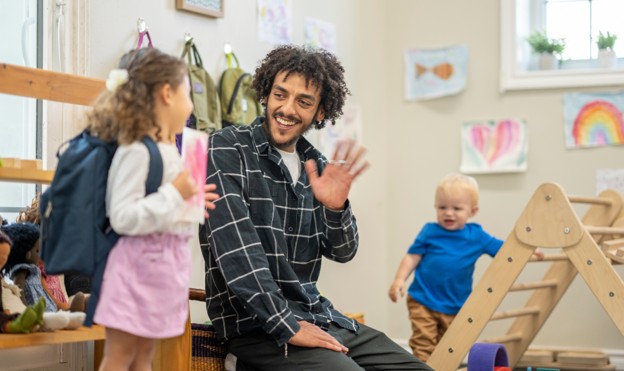
It’s also worth asking whether a teacher can meet your child at the door and walk them over to a favorite activity, like the block corner, the art table, or a cozy reading nook. The Child Mind Institute recommends this kind of warm hand-off for children who struggle to separate. Moving straight from your arms to a caring adult and something fun gives your child something to look forward to and makes it a little easier for both of you to say goodbye.
What Happens After You Leave
Many parents carry the picture of their crying child with them all day long. If that’s you, here’s what usually happens a few minutes after you walk out the door: the tears stop. The American Academy of Pediatrics notes that a baby’s tears typically fade within minutes of a parent leaving. Our teachers are right there to help. They offer cuddles and gently guide your child toward something fun, like a stack of blocks or a story on the rug. Soon your child is settling in and joining their friends.
At Willowdale, you don’t have to wonder how the day is going. We share daily photos through Tadpoles, so you can see your child building, painting, and smiling while you’re at work. During those first few weeks, that small peek into their day can bring a huge sense of relief. You can also learn how we share milestones with families through our developmental transparency and progress tracking.
How Willowdale Supports Gentle Goodbyes
We design every Willowdale classroom so children feel safe enough to relax, explore, and have fun. Here’s how we help make goodbyes a little easier for your family:
- Certified, caring educators. Our teachers are trained in early childhood development, and they know every child adjusts at their own pace. There’s no rush and no pressure.
- Predictable daily routines. When children know what comes next, they feel more secure. A steady rhythm helps the day feel familiar.
- Play-based learning. Our STEAM curriculum gives children exciting, hands-on activities to dive into right after drop-off.
- Secure, health-focused classrooms. Our safety and wellness protocols are in place so you can head out the door with peace of mind.
- Close teacher-family teamwork. We work side by side with you to support your child’s emotional, social, physical, and intellectual growth.
We also know that some children are naturally cautious, watchful, or slow to warm up, and that’s perfectly okay. Our guide to childcare for every temperament shares how we support all kinds of personalities. If your child needs a bit more reassurance, our article on helping an anxious child thrive in childcare offers even more ideas.
Whatever stage your child is in, we have a program built for them, from our infant classrooms and toddler classrooms to our preschool and pre-K classrooms.
When to Talk to Your Pediatrician
For most families, drop-off tears fade with time and consistency. Still, some children feel distress that’s more intense or lasts longer than usual. According to StatPearls from the National Library of Medicine, separation anxiety disorder affects about 4% of children in population-based studies, and it usually begins around age 6.
It may be a good idea to check in with your pediatrician if your child:
- Still cries hard at every drop-off after several months
- Often has stomachaches, headaches, or nightmares about being away from you
- Worries all the time that something bad will happen to you
- Won’t leave your side in many places, not just at school
- Feels so upset that it affects their sleep, eating, play, or friendships
It’s always okay to reach out early. Trust your instincts. You know your child better than anyone.
Frequently Asked Questions
Is separation anxiety at drop-off normal?
Yes, completely normal. Separation anxiety is a healthy part of your child’s emotional growth. It often shows up in the second half of the first year and peaks somewhere between 10 and 18 months. Then it slowly fades as your little one learns one comforting truth: you always come back.
How long does separation anxiety last when starting childcare?
Every child moves at their own pace, so try not to compare. Some kids feel right at home within a few days. Others need several weeks to settle in, and that’s perfectly okay too. What usually helps most is steady routines, a goodbye ritual your child can count on, and warm bonds with their teachers. Those three things often make the adjustment shorter and gentler for everyone.
Should I stay until my child stops crying?
It’s such a natural instinct, but usually, no. Staying longer tends to stretch out the hard feelings instead of easing them. Give your child a loving goodbye, hand them to a teacher you trust, and head out with confidence. We know it’s tough to walk away from tears. Most children calm down within minutes once the goodbye is over.
Does sneaking out help reduce separation anxiety?
We understand the temptation, but no. Slipping out might skip the tears that morning, yet it can make separation anxiety worse over time. When a child turns around and you’re suddenly gone, they may start to worry you could vanish without warning. A clear, loving goodbye, even a teary one, builds the trust your child needs. So always say goodbye.
What age is separation anxiety the worst?
For many children, it’s most intense between 10 and 18 months. But don’t be surprised if it pops up again later. Big transitions can bring those feelings back, like moving to a new classroom, welcoming a baby brother or sister, moving to a new home, or coming back after a long vacation.
Can separation anxiety come back after my child has adjusted?
Yes, and it doesn’t mean you’ve lost progress. It’s very common for drop-off worries to return after an illness, a holiday break, a change in schedule, or a big developmental leap. When it happens, go back to the basics. Lean on your goodbye ritual, keep routines steady, and let your child’s teacher know what’s going on at home so they can offer a little extra comfort.
How can I tell if my child’s separation anxiety is more than a phase?
Trust your gut. It’s a good idea to talk with your pediatrician if the distress stays intense for months, shows up as physical complaints like stomachaches or headaches, or keeps your child from enjoying play, sleep, or friendships. Checking in early is never an overreaction.
How do Willowdale teachers help children who cry at drop-off?
Our teachers greet every child with a warm hello, offer plenty of comfort, and gently guide them toward a favorite activity to help them ease into the day. We also partner closely with you to learn what soothes your child, whether that’s a certain song, a special phrase, or a cozy cuddle. And you won’t be left wondering. You’ll get daily photos through Tadpoles, so you can see how your child’s day is going, smiles and all.
Turning Tearful Goodbyes Into Confident Waves
Those teary mornings won’t last forever, even if they feel endless right now. And while you’re both getting through them, your child is building something that lasts a lifetime: trust, resilience, emotional awareness, and confidence. Every goodbye you share and every reunion that follows teaches them they can handle big feelings and that the people they love will always come back. With a loving ritual, a steady routine, and a caring teaching team by your side, most little ones go from clinging to waving faster than parents expect. One morning soon, you might just get a quick hug, a big grin, and a happy wave as they run off to play.
If your family is preparing for childcare or preschool in Chester County, we would love to meet you. Visit our schools in Avondale, Chadds Ford, Kennett Square, and West Chester, or browse our parent guides and preschool readiness checklist.
Ready to see how gentle goodbyes work at Willowdale? Schedule a tour or call us at (484) 770-8490 to meet our teachers and explore our classrooms.