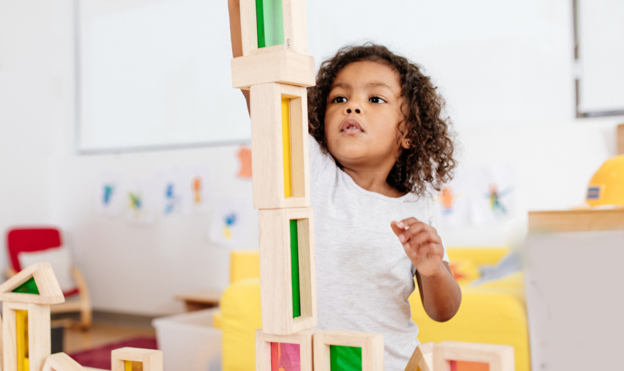
Step into a great early childhood classroom, and at first glance it might look like the kids are “just playing.” A toddler stacks cups higher and higher until they crash down with a giggle. Two preschoolers run a busy pretend bakery, taking orders and handing out play-dough cupcakes. Over in the block corner, a group of 4-year-olds is having a cheerful debate about how to build a bridge strong enough for a toy car.
Watch a little longer, and you’ll see much more going on. Those children are counting, taking turns, and working out who gets to be the baker next. They’re testing ideas, trying again when the bridge collapses, handling frustration, and picking up new words along the way. That’s what play-based learning looks like, and it’s far more powerful than it seems.
At Willowdale Children’s Academy, our family-owned team has spent more than 15 years caring for children across Chester County. In that time, we’ve built a play-based STEAM curriculum for infants all the way through pre-K. In this guide, we’ll walk you through what learning through play really means, what brain science tells us about it, and how it helps get your child ready for kindergarten and beyond.
Key Takeaways
- Play is how young children learn best. Both the American Academy of Pediatrics and NAEYC recognize play as the main way little ones learn about the world.
- Young brains are growing fast. In the first few years of life, more than 1 million new neural connections form every second. Playful, loving, back-and-forth moments with caring adults help shape them.
- Play builds important thinking skills. Through play, children strengthen executive function: paying attention, holding information in mind, and practicing self-control.
- Guided play can be a smart way to learn math. When teachers set a goal and let children explore their way there, kids can sometimes learn early math skills better than through direct instruction.
- Play-based doesn’t mean anything goes. A play-based classroom is thoughtful and intentional. Teachers plan activities, guide children’s discoveries, and watch closely to see how each child is growing.
What Is Play-Based Learning?
Play-based learning is a way of teaching that uses play to help children grow in every way that matters: thinking, getting along with others, handling feelings, and building strong, coordinated bodies. Put simply, it means children learn by doing.
Instead of sitting through long lessons or memorizing facts, kids explore, experiment, and discover things for themselves. Picture a 3-year-old at the water table, pouring water from a big cup into a small one and watching it spill over. No one handed her a worksheet on “more” and “less,” but she’s learning it firsthand. And she’ll probably try it again and again until it clicks.
That doesn’t mean teachers just step back and watch. In a play-based classroom, teachers guide the experience with care. They set up inviting activities, ask questions that spark new ideas (“What do you think will happen if you use the tiny cup?”), and gently nudge children toward their next discovery. The play feels free to your child, but there’s real thought and purpose behind it.
The experts agree. The National Association for the Education of Young Children (NAEYC), one of the most respected voices in early education, says play is “essential for all children, birth through age 8.” NAEYC calls it “the central teaching practice that facilitates young children’s development and learning.” In other words, play isn’t a break from learning. For young children, it is the learning.
NAEYC also notes that all young children need time to play every day, and not just in quick bursts. They need daily, sustained stretches of play, both indoors and outdoors. Building a block tower, digging in the sandbox, or playing pretend in the kitchen corner all give children the time and space to dig deep, solve problems, and follow their curiosity wherever it leads.
So the next time your child comes home with sand in their shoes or paint on their sleeves, you can smile. Those messy, joyful moments are exactly how little minds grow.
The Play Continuum: Free Play, Guided Play, and Direct Instruction
Not all play looks the same. Educators think of learning as a continuum:
| Approach | Who Leads | What It Looks Like | Best For |
|---|---|---|---|
| Free play | Child | Choosing toys, pretending, exploring freely | Creativity, independence, social skills |
| Guided play | Child, with a teacher’s goal | A teacher sets up a bridge challenge and asks open-ended questions | Targeted skills like math, vocabulary, and problem-solving |
| Direct instruction | Teacher | Short, focused lessons such as letter formation | Specific skills that need explicit modeling |
NAEYC recommends that high-quality programs offer a thoughtful mix of all three. Strong early childhood classrooms balance child choice with intentional teaching.
What Brain Science Says About Play
When your child spends the morning building towers or pretending to be a firefighter, something remarkable is happening inside their head. Brain research shows that play is one of the most powerful ways young children grow, learn, and get ready for life. Here’s what the experts have found.
Young Brains Are Built Through Experience
The early years are a time of amazing growth. According to the Harvard Center on the Developing Child, more than 1 million new neural connections form every second in the first few years of life. That’s a lot of building going on.
Brains are built from the bottom up, a bit like a house. The early years lay the foundation, and the experiences children have during this time help decide whether that foundation turns out sturdy or shaky.
Here’s the key part: children don’t build these connections by sitting back and watching. They build them by doing. They touch, move, talk, and interact with caring adults who respond to them. Harvard researchers call these back-and-forth moments “serve and return.”
Picture your toddler handing you a toy block. You smile and say, “Oh, a red block! Thank you!” They grin and hand you another one. That simple exchange is serve and return in action, and play is full of moments just like it.
Pediatricians Call Play “Brain Building”
Doctors take play seriously, too. In its landmark clinical report, The Power of Play, the American Academy of Pediatrics put it plainly: “play is not frivolous: it enhances brain structure and function and promotes executive function.” The AAP reaffirmed the report in 2025, so this guidance is as current as ever.
The report found that play matched to a child’s age and stage helps build a wide range of skills, including:
- Social-emotional skills, like making friends and understanding feelings
- Cognitive skills, like problem-solving and curiosity
- Language skills, like learning new words and telling stories
- Self-regulation skills, like calming down and waiting
HealthyChildren.org, the AAP’s website for parents, shares even more good news. Research shows that play can help children plan, get organized, get along with others, and manage their emotions. It also supports language, math, and social skills. Play even helps children cope with stress, which matters more than ever for little ones adjusting to new routines and new places.
The AAP believes in play so strongly that it encourages pediatricians to speak up for “playful rather than didactic learning” in preschool. In everyday terms, that means less drilling and lecturing and more hands-on discovery, with a focus on social-emotional and executive function skills.
Play Strengthens Executive Function
You may have heard the term “executive function” and wondered what it means. Think of it as the brain’s air traffic control system. It helps your child focus, juggle information, and make good choices, even when lots of things are happening at once.
Executive function includes three core skills:
- Working memory: Holding information in mind, like remembering the rules of a game.
- Inhibitory control: Pausing before acting, like waiting for a turn on the slide.
- Cognitive flexibility: Switching between ideas, like going from “customer” to “chef” in a game of pretend restaurant.
These skills don’t appear overnight. Children need lots of practice, and play gives them that practice every single day. The Harvard Center’s Brain-Building Through Play series shows how familiar games give these skills a real workout:
- Freeze dance asks children to stop the moment the music does, which builds self-control.
- Hide-and-seek helps kids remember where they’ve already looked and wait quietly in their hiding spot.
- Sorting games challenge children to switch rules, like sorting by color and then by shape.
- Pretend play asks children to stay in character, follow a storyline, and adapt when a friend changes the plot.
Harvard researchers also suggest something called “play plans.” Before pretend play begins, children decide who they’ll be and what they’ll do. One child might say, “I’ll be the vet, and you bring your sick puppy to my office.” Making a plan, then sticking to it, gives children valuable practice in thinking ahead, organizing their ideas, and keeping their actions on track.
You can try this at home, too. Before your next game of pretend, ask your child, “Who will you be today, and what’s your plan?” It’s a small question with big benefits.
The takeaway: Those freeze dance parties and living-room tea parties aren’t just fun. They’re building the focus, memory, and self-control your child will rely on in kindergarten and far beyond.
Play vs. Worksheets: What the Research Shows
All that brain-building sounds great, but you might still have a nagging worry. Maybe a friend’s child is already doing worksheets at age 3. Maybe you’ve toured a preschool where kids sit at desks and trace letters. It’s natural to wonder whether a more academic, worksheet-heavy program would give your child a head start.
It’s a fair question, and researchers have studied it closely. Their answer is reassuring: play holds its own, and then some.
What a Major Study Found
In 2022, the journal Child Development published a large review that pulled together the results of 39 studies on children ages 1 to 8. The researchers compared three ways of learning:
- Guided play: A teacher sets a learning goal, then lets children explore their way toward it through hands-on play.
- Direct instruction: A teacher explains and children listen, practice, and repeat, much like a traditional lesson or worksheet.
- Free play: Children play on their own, without an adult guiding them toward a goal.
Guided play came out ahead of direct instruction on early math skills, shape knowledge, and task switching. Task switching is an executive function skill: the ability to shift your thinking when the rules change. Guided play also beat free play when it came to spatial vocabulary, words like “above,” “behind,” and “between.”
Just as important, the researchers found no meaningful evidence that guided play was less effective than direct instruction on any skill they studied.
In short: Children learn at least as well through thoughtful, well-designed play, and sometimes better. And they have a lot more fun doing it.
Why Pretend Play Packs Such a Punch
The National Association for the Education of Young Children (NAEYC) highlights another reason play matters so much. During rich, detailed pretend play, children have to plan who will play which role. Then they have to stay in character, even when they’d rather grab the toy stethoscope from the “doctor.”
That combination of planning and impulse control builds self-regulation, symbolic thinking, memory, and language. These are the very skills children lean on in kindergarten and beyond. So when your child spends 20 minutes running a pretend pet hospital, they’re getting serious practice for school.
Even with all this research, a few common misunderstandings about play still pop up. Let’s clear them up.
Common Myths About Learning Through Play
If you’ve ever felt a little unsure when someone says, “So they just play all day?”, you’re not alone. Here are four myths parents hear often, and what’s really going on.
Myth 1: “They’re just playing, not learning.”
It’s easy to see a pile of blocks and think “fun,” not “learning.” But every block tower is a hands-on lesson in balance, counting, and sticking with it when things topple over. That pretend restaurant? It’s full of new words, taking turns, and planning who cooks and who orders. The learning is real, even when it looks like play.
Myth 2: “Play means no structure.”
A quality play-based classroom isn’t a free-for-all. Teachers carefully choose materials, set learning goals, and know just when to step in with a question like, “How could you make your bridge stronger?” The structure is there. It’s simply built into the play instead of handed out on a worksheet.
Myth 3: “Academic preschools get kids ahead faster.”
Early drills might teach a child to recite the alphabet sooner. But reciting isn’t the same as being ready to learn. Play builds attention, self-control, and curiosity, the skills that help children keep learning long after preschool. Remember: a head start only helps if your child still loves the race.
Myth 4: “Play is only for little kids.”
Play doesn’t stop mattering once your child can read. NAEYC recognizes play as essential all the way through age 8, and its benefits carry well into the elementary years. Big kids still need time to build, imagine, and explore.
The key takeaway: Play isn’t the opposite of learning. For young children, it’s one of the best ways to learn. Next, let’s look at what that looks like in a real classroom.
7 Big Benefits of Play for Young Children
So what does all this play actually do for your child? The benefits reach into almost every part of how children grow. Here are seven of the biggest ones and how they show up in everyday moments.
1. Stronger Thinking Skills
Play is where children first learn to think like scientists. They make guesses, test them, and figure out what to try next. When your child wonders whether the big ball will fit through the cardboard tube and then tries it, they’re making a prediction and checking it. Each small experiment teaches them how to solve problems on their own.
2. Richer Language
Some of the best vocabulary lessons happen during pretend play. A game of “grocery store” might bring in words like cashier, receipt, and heavy. A pretend doctor’s visit adds thermometer and checkup. When children talk, plan, and play together, new words come naturally, and they stick because they mean something.
3. Early Math Foundations
Math starts long before numbers on a page. Stacking blocks, sorting toy cars by color, and measuring how many cups of sand fill a bucket all build number sense and spatial reasoning. Your child is learning that four blocks make a taller tower than two, and that a big block won’t balance on a tiny one. These hands-on moments give later math lessons something real to connect to.
4. Self-Regulation
Waiting is hard when you’re 3. Games with simple rules give children safe, low-stakes ways to practice it. Taking turns at a board game, freezing when the music stops, or trying again after a tower falls all teach kids to manage big feelings and control their impulses. Those skills matter in the classroom and everywhere else.
5. Social-Emotional Growth
Playing with friends isn’t always smooth, and that’s part of the point. When two children both want the red truck, they get real practice in sharing, seeing another point of view, and finding a fair solution. With a teacher nearby to guide them, these small conflicts become lessons in empathy and friendship.
6. Physical Development
Play keeps little bodies busy and growing stronger. Climbing, running, and jumping build large-motor skills like balance and coordination. Pouring water, squeezing play-dough, and drawing with crayons build the fine-motor control your child will later need to hold a pencil, button a coat, and use scissors.
7. A Lifelong Love of Learning
This may be the most important benefit of all. When learning feels joyful, children want more of it. A child who feels proud after solving a puzzle or building a bridge starts to see themselves as someone who can figure things out. That curiosity and confidence can carry them through kindergarten and well beyond.
Bottom line: Play gives children a strong start in thinking, talking, moving, and getting along with others, all while keeping their natural curiosity alive.
Of course, play looks a little different at every age. Let’s walk through what it looks like as your child grows.
What Learning Through Play Looks Like by Age
Play grows right along with your child. A baby’s play looks nothing like a 4-year-old’s, but both are doing important work. Here’s what learning through play looks like at each stage, and how we support it in our classrooms.
Infants (6 Weeks to 13 Months)
Babies learn about the world through their senses and through the people who love them. Every coo, touch, and smile is a chance to connect and learn.
Simple games carry big lessons. Peekaboo teaches babies that people and things still exist even when they’re hidden, which can also make goodbyes a little easier over time. Shaking a rattle shows them that their actions make things happen. Songs with hand motions, like “Itsy Bitsy Spider,” support early language and memory.
In our infant classrooms, teachers talk babies through their day: “Now we’re washing your hands. The water feels warm!” They respond warmly to every babble and cry, and they offer safe sensory play with soft textures, gentle sounds, and colorful toys. Each loving exchange helps build a strong foundation for everything that comes next.
Toddlers (14 to 36 Months)
Toddlers are little scientists, and their lab is everywhere. They fill buckets and dump them out. They stack blocks just to knock them down. They copy everything you do, from stirring a pot to talking on the phone.
All that busy exploring is learning in action. Sensory bins filled with rice, water, or sand build coordination and curiosity. Simple pretend play, like feeding a baby doll, grows vocabulary and imagination. Movement games such as dancing, marching, and chasing bubbles help toddlers build strength and practice following simple directions.
Our toddler classrooms bring all of this together through our STEAM curriculum. Toddlers dig into sensory exploration, imaginative play, and group activities that grow their language, motor skills, and early problem-solving. Teachers follow each child’s interests, so a toddler who loves trucks might find a ramp waiting to test how fast those wheels can roll.
Preschool and Pre-K (3 to 5 Years)
By preschool, play gets bigger, more detailed, and more social. Children create pretend worlds with storylines and roles. They take on building projects that last all morning, and they start enjoying games with rules.
This is where guided play really shines. A teacher might ask the group, “How can we build a bridge strong enough to hold a toy car?” Then the children get to work. They test blocks, cardboard, and tape. They watch what holds and what collapses. They talk through ideas, disagree, and try again together. The teacher stays close, asking questions and nudging their thinking without handing over the answer.
In our preschool and pre-K classrooms, projects like this blend engineering, math, art, and teamwork in a way that feels like play to children. By the time they head to kindergarten, they’ve had lots of practice planning, problem-solving, and working with friends. Those skills help them settle into a new classroom with confidence.
The takeaway: At every age, play meets children where they are and helps them take the next step. From peekaboo to bridge-building, each stage builds on the last.
How Willowdale Brings Play to Life
All this research points to one thing: play works best when it’s done with care and purpose. At Willowdale, we’re a family-owned, play-based STEAM childcare and preschool, and we’ve built our classrooms around that idea. Here’s what learning through play looks like on an ordinary day with us.
- STEAM projects woven into everyday play. Our STEAM curriculum blends science, technology, engineering, art, and math into the things children already love to do. One morning, your child might check the sky and help track the weather. Another day, they might plant seeds and watch them sprout, head out on a nature scavenger hunt, or build a block tower taller than they are. To your child, it all feels like fun. Underneath, they’re observing, measuring, predicting, and creating.
- Teachers who guide, not just direct. Our certified educators are a bit like curious tour guides. They set up rich, inviting spaces for children to explore. They ask questions that get little minds working, like “Why do you think the tower fell?” And they bring in new materials at just the right moment to stretch each child’s thinking a little further.
- Early literacy that feels like play. Writing starts long before a child picks up a pencil. Through Learning Without Tears, children build handwriting readiness with hands-on, multisensory tools. One favorite is the Wet-Dry-Try method, which lets children practice forming letters with a sponge and chalk before they write them on their own. It’s playful, it’s tactile, and it builds confidence one letter at a time.
- Social-emotional skills, every single day. Learning to share, name feelings, and calm down are some of the most important lessons of the early years. Daily feelings check-ins, simple acts of kindness, and calm-down strategies are all part of our social-emotional learning approach. These small moments help children understand themselves and get along with friends.
- Enrichment that keeps kids moving. Music, dance, Soccer Shots, sign language, and Spanish give children even more ways to learn through play. Whether they’re kicking a ball, singing a new song, or signing “more,” they’re building skills and having a blast doing it.
- Progress you can see. You should never have to wonder how your child is growing. Our teachers track progress through careful observation and portfolios of children’s work. You’ll also get daily photos and updates through the Tadpoles app, so you can peek into your child’s day even when you’re at work. You can learn more about our commitment to developmental transparency and progress tracking.
- Quality you can trust. Willowdale is Keystone STARS accredited, and we maintain Pennsylvania-mandated teacher-to-child ratios. That means your child gets the attention and care they deserve, every day.
Play also works best when children feel safe and secure. A child who knows what comes next, and feels truly understood, has the confidence to try new things. Our guides to building a toddler daily routine and childcare for every temperament explain how predictable days and individualized support help children explore with confidence.
The good news? You don’t need a classroom to bring these same benefits home. Let’s look at a few easy ways to do it.
How to Encourage Learning Through Play at Home
You don’t need fancy toys, special kits, or a playroom full of gadgets to support your child’s learning. Some of the best play happens with everyday items and a few minutes of your attention. Here are seven simple ideas to try this week.
1. Cook Together
The kitchen is a great place to learn. When your child scoops flour, counts eggs, or stirs batter, they’re practicing early math. When they watch dough rise or butter melt, they’re seeing science in action. Give them a safe job, like pouring or mixing, and let them feel like a real helper. Yes, there may be a little mess. It’s worth it.
2. Play “I Spy”
This classic game works almost anywhere: in the car, at the grocery store, or in a waiting room. Try “I spy something green” or “I spy something round.” Your child sharpens their attention, picks up new words, and learns to sort things into groups. For younger kids, keep it simple with colors. For older ones, try shapes or letter sounds.
3. Build With Household Items
Empty boxes, plastic cups, and couch cushions can become towers, tunnels, and the best fort ever. Building helps children plan, solve problems, and figure out what balances and what tumbles. When something falls, ask, “How could we make it stronger?” and watch them get to work.
4. Join Pretend Play
When your child invites you into a game of pretend, say yes, and let them be in charge. Maybe you’re a customer at their restaurant or a patient at their animal hospital. Following their lead builds their language, creativity, and confidence. It also shows them that their ideas matter to you.
5. Have a Freeze Dance Party
Put on some music, dance like crazy, and freeze when it stops. It’s silly and fun, but it’s also great practice in self-control. Your child has to listen closely, stop their body on cue, and wait before moving again. Those are the same skills they’ll use when waiting their turn in class.
6. Get Outside
Nature is full of things to explore. Collect leaves and sort them by size or color. Splash in puddles after a rainy day. Count the birds you see on a walk. Outdoor play builds curiosity, burns off energy, and gives your child plenty to talk about.
7. Ask Open-Ended Questions
Questions that don’t have just one right answer spark big thinking. Try “What do you think will happen?” or “How did you build that?” or “What should we try next?” Then give your child time to think and answer. You’ll be amazed at the ideas they come up with.
The takeaway: Learning through play doesn’t take a lot of time or money. It just takes a little curiosity, a few everyday objects, and you. When home and school both make room for play, your child gets a strong, joyful start that lasts.
Frequently Asked Questions
What is play-based learning in preschool?
Play-based learning is a way of teaching where children learn by doing. They explore with their hands, play pretend, build, and play games, and each of those activities teaches real skills.
It isn’t random, though. Teachers plan the classroom with care, set up materials with learning goals in mind, and gently guide children toward new ideas. At the same time, children get to make choices about what to explore and how. Picture your child choosing to build a garage for toy cars. A teacher might then ask, “How many cars do you think will fit?” Your child gets to follow their interest while practicing counting and problem-solving.
Why is play-based learning better for young brains?
Play engages almost everything at once. When children play, they use their senses, move their bodies, talk, and connect with the people around them. All of that activity helps build strong connections in the brain during the years when it’s growing fastest.
The American Academy of Pediatrics agrees. It reports that play enhances brain structure and function and strengthens executive function, the set of skills that help children focus, remember, and manage their behavior. So when your child spends the afternoon running a pretend pizza shop, their brain is getting a full workout.
Does play-based learning prepare children for kindergarten?
Yes, and in ways that matter well beyond the first day of school. Guided play helps children build communication, problem-solving, and self-regulation skills, along with early math and literacy.
Those are the building blocks children need in a more formal classroom. A child who can listen to a friend, wait their turn, and try again after a mistake is ready for more than just letters and numbers. They’re ready to learn. You can explore our kindergarten readiness approach to see how we help children make that leap with confidence.
Is play-based learning just unstructured free time?
Not at all. This is one of the most common questions we hear, and it’s a fair one. From the outside, a play-based classroom can look like simple fun.
Behind the scenes, though, high-quality play-based learning is very intentional. Teachers choose materials with specific goals in mind, ask open-ended questions to stretch children’s thinking, and watch closely to see how each child is growing. Our days also include short, focused activities led by teachers, like circle time and small-group lessons. Think of it as structure your child can enjoy.
How is play-based learning different from academic preschool?
Academic preschools often lean on worksheets, drills, and memorization. Children may sit for longer stretches and repeat the same tasks to learn letters and numbers.
Play-based classrooms teach the same core concepts, but through active, hands-on experiences. Instead of circling pictures of three apples on a page, your child might count three real apples at snack time or stack three blocks into a tower. And the research is encouraging: guided play can match, and sometimes beat, direct instruction for some early math skills. Children learn the material while keeping their natural love of learning.
How do teachers measure progress in a play-based classroom?
Teachers are always paying attention, even when it looks like children are simply playing. They observe how each child talks, solves problems, moves, and interacts with friends. They document milestones along the way and keep portfolios of children’s work, so growth is easy to see over time.
At Willowdale, you don’t have to wait for a conference to know how your child is doing. Families receive daily updates through the Tadpoles app, including photos and notes from the day. It’s a simple way to feel connected, and it gives you plenty to talk about at dinner.
How can I support play-based learning at home?
The good news is it doesn’t take special toys or lots of time. A few simple ideas go a long way:
- Cook together and let your child measure, pour, and stir.
- Build forts from blankets, pillows, and boxes.
- Play freeze dance to practice listening and self-control.
- Read and act out stories to grow language and imagination.
- Ask open-ended questions like “What do you think will happen next?”
Most of all, let your child lead. Follow their curiosity, join in when they invite you, and enjoy the moment. Your attention is one of the best learning tools they have.
Is play-based learning good for infants and toddlers?
Absolutely. Play is how babies and toddlers learn about the world. They don’t need lessons. They need loving adults, safe spaces, and plenty of chances to explore.
Simple games carry big lessons at this age. Peekaboo teaches babies that people still exist when they’re out of sight. Stacking and knocking down blocks builds coordination and early problem-solving. Sensory play and songs grow language and memory. Every giggle and grab is helping your little one’s brain grow.
Let Your Child Learn the Way Young Brains Learn Best
Play isn’t a break from learning. For young children, play is learning.
When your child builds a wobbly tower, runs a pretend bakery, or splashes at the water table, they’re doing the important work of childhood. They’re testing ideas, finding words for their feelings, working through problems with friends, and discovering what they can do. With caring teachers by their side, those everyday moments grow into thinking skills, confidence, and curiosity that last a lifetime.
At Willowdale, we see it happen every day. The child who couldn’t wait their turn learns to cheer for a friend. The toddler who only pointed starts using new words. The preschooler who gave up when the bridge fell now says, “Let’s try again!”
That’s the kind of learning that sticks. And it all starts with play.
We’d love for you to see it in action. Schedule a tour at one of our Chester County schools, meet our teachers, and watch how joyful, purposeful play helps children thrive.
Curious about what this looks like in a real classroom? Read our early learning FAQ, learn why pre-K is essential before kindergarten, or visit one of our schools in Avondale, Chadds Ford, Kennett Square, or West Chester.
See play-based STEAM learning in action. Schedule a tour or call us at (484) 770-8490 to meet our teachers and explore our classrooms.