Childcare & Preschool | Willowdale Children’s Academy

Preparing for Your Child’s First Day in Childcare
Starting childcare is a big milestone for both children and parents. Families often go online to ask about separation anxiety, routines, what to pack, behavior expectations, and readiness skills. This guide offers practical, expert-backed tips to make the transition smoother for both your child and you.
“Thank You for setting standards that exceed normal expectations.”

By Jennifer V.

Talking About Childcare Before the First Day
- Explain Simply: Use short, reassuring sentences about where they’re going and what to expect.
- Read Books Together: Choose picture books about starting school or daycare to introduce the idea.
- Visit the Center: If possible, attend orientation or do a walk-through to reduce fear of the unknown.
Tip: Keep your language positive — focus on friends, play, and learning, not on being “left behind.”
Building Routines at Home
Sleep
reschoolers need 10–13 hours of sleep per day (CDC). Establish bedtime 1–2 weeks before starting childcare.
Morning Practice
Rehearse waking up, dressing, and eating breakfast to reduce first-day stress.
Goodbye Rituals
A quick hug, kiss, and phrase (“See you after snack!”) helps children feel secure.
What to Pack for the First Day? Here is What We Ask to Our Parents at Willowdale Children’s Academy
We ask all our parents to label every item with their child’s first and last name. For safety reasons, we also ask them to avoid bringing glass containers or bottles to school.
Lambs (Infants)
To help us care for your infant, please pack a bag with the following items:
Daily Essentials:
- Diapers
- Wipes
- Diaper cream (with a signed and dated permission form)
- 2-3 complete changes of clothes
- A fitted crib sheet
- Family photos to make them feel at home
- A copy of your child's daily schedule
Feeding
- Bottles, premade for the day
- Any additional nut-free food your child may need
Comfort Items (If applicable)
- Pacifier (without any attachments)
- Bibs
- Sleep sack (zippered sacks with arm openings only; loose blankets and swaddles are not permitted for safety reasons)
Kangaroos (Young Toddlers)
Please prepare these items for your young toddler’s day:
Daily Essentials:
- Diapers
- Wipes
- Diaper cream (with a signed and dated permission form)
- 2-3 complete changes of clothes
- A crib sheet and a small blanket for naptime
- Family photos
- Sunscreen (with a signed and dated permission form)
Meals & Drinks
- Nut-free lunch and snacks
- Sippy cups
Turtles (Older Toddlers)
Daily Essentials:
- Diapers/pull-ups and wipes (if needed)
- Diaper cream (with form, if applicable)
- 2-3 complete changes of clothes. If your child is potty training, please include extra underwear and a spare pair of shoes.
- A crib sheet and a small blanket for naptime
- Family photos
- Sunscreen (with a signed and dated permission form)
Meals & Drinks
- Nut-free lunch and snacks
- A cup or a water bottle
Preschool
For our preschoolers, please pack the following:
Daily Essentials:
- 2-3 complete changes of clothes
- A crib sheet and a small blanket for naptime
- A "Fun for One Bag" containing quiet, individual activities for rest time (e.g., books, coloring pages)
- Family photos
- Sunscreen (with a signed and dated permission form)
Meals & Drinks
- Nut-free lunch and snacks
- A cup or a water bottle
Pre-K
To get your Pre-K student ready for their day, here is what you should bring:
Daily Essentials:
- 2-3 complete changes of clothes
- A crib sheet and a small blanket for naptime
- A "Fun for One Bag" with quiet activities for rest time
- Family photos
- Sunscreen (with a signed and dated permission form)
Meals & Drinks
- Nut-free lunch and snacks
- A cup or a water bottle

Separation Anxiety: What’s Normal?
- Many toddlers and preschoolers cry at drop-off — this is normal and temporary.
- Stay calm and consistent. Long, drawn-out goodbyes increase anxiety.
- Trust the teachers — most children calm down within minutes of you leaving.
Behavior Expectations in Childcare
Parents often ask how childcare centers handle sharing, following rules, and group play.
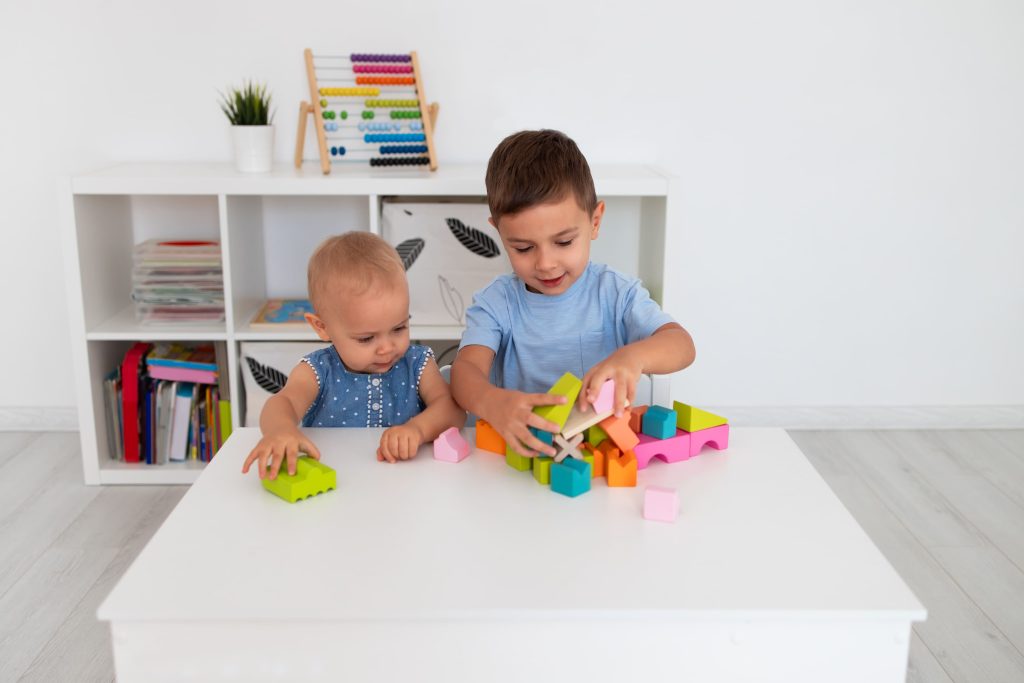
- Children learn parallel play around age 2–3 and gradually shift to cooperative play by 4–5.
- Teachers guide behavior using positive reinforcement and gentle redirection.
- Practicing turn-taking at home helps ease the adjustment.

Supporting Kindergarten Readiness Through Childcare
Childcare helps build the core skills linked to school readiness:
- Following directions.
- Engaging in group activities
- Developing early literacy and numeracy through play.
- Practicing independence (washing hands, toileting, self-feeding).
Balancing Screen Time and Learning Activities
Parents worry about screen use in childcare. According to the AAP, children ages 2–5 should have no more than 1 hour of high-quality screen time per day. Ask your childcare center about their policies.
Instead, look for programs emphasizing:
Story time and reading
Outdoor play
Tummy Time
Social play and problem-solving.
Frequently Asked Questions (FAQ) for Parents of
Infants (0–6 Months)
Talk positively about childcare, read books about starting school, and visit the center together if possible.
It often improves within 1–2 weeks as children adjust to the new routine and environment.
Staff are trained to use redirection, calm voices, and positive reinforcement to guide behavior.
Skills include following directions, recognizing letters and numbers, taking turns, and practicing independence in daily routines.
Create a consistent, quick goodbye routine. Avoid sneaking out, but don’t prolong the farewell.
Pack extra clothes, comfort items, labeled water bottles, and snacks or lunch if needed. Always label everything.
Many centers accept children in diapers or pull-ups. However, starting toilet training early helps with independence and readiness.
Children ages 3–5 need 10–13 hours of sleep in 24 hours (CDC), often with a nap during the day.
Policies vary. The AAP recommends limiting to 1 hour per day of high-quality programming for ages 2–5. Ask your center about their guidelines.
It’s common for shy children to need extra time. Teachers encourage participation gently, and comfort builds with routine exposure.
Final Thoughts
Preparing for the first day in childcare is about routines, reassurance, and readiness. While the transition can be emotional, it builds independence, social skills, and early learning habits that prepare children for preschool and kindergarten success. With the right preparation — and trust in the teachers — your child will thrive in their new environment.