
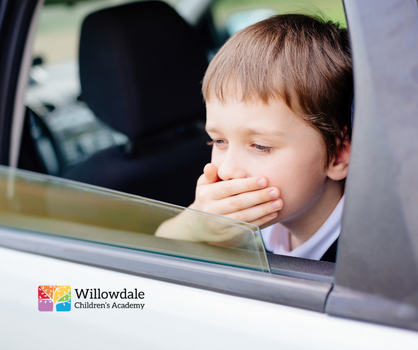
Preventing motion sickness in children ages 2-5
With the weekend trips to the shore during summer, having toddlers or preschool children who get car sick is an added stress to the already all-consuming job of parenting, but with a little bit of preparation, you can lessen the effects of nausea if not prevent it entirely.
As per the American Society of Pediatrics, symptoms are mainly triggered by motion.
Motion sickness happens when your brain has a “sensory mismatch.” A preschool-aged child watching a movie or an older child reading a book in the car is an example of this mismatch. The child’s body feels the motion but their eyes are fixed on something still — like a screen.
These inconsistent “incoming messages” to the brain can cause the body to react with sweating, dizziness, and nausea that can lead to vomiting. Children between the ages of 2-5 are particularly susceptible.
Here are 8 tips for avoiding car sickness in children:
- Prepare in advance. Pair trips with naps or sleep. Choose to drive at night while your child sleeps if they are too old for naps. During sleep, your eyes are not sending signals to the brain so there is no opportunity for a sensory mismatch. Nighttime is the perfect time for you to do long drives with a child prone to motion sickness.
- Eat accordingly. Many parents think children should travel on an empty stomach but this is not true. It is best to feed your child some bland snacks (nothing spicy or greasy) before they ride. Hunger can actually trigger nausea. Don’t overfeed your child.
- No screens or books. It is very tempting to keep your kids occupied on long drives with tablets, screens, or books. However, the reality is that they should be looking out the window to synchronize their sensory information to prevent nausea or other symptoms.
- Better position your child’s seat. Children who sit too low and can’t see out the window are more likely to have motion sickness. Place your child’s seat in the middle of the car so they can see in front of them. This helps to keep symptoms at bay.
- Provide air ventilation. Make sure your car is well ventilated and your child is taking deep breaths of oxygen via the air conditioner or the window. Cold air usually soothes someone who is beginning to show symptoms.
- Take breaks. If your child is beginning to feel sick, stop the car immediately and let your child walk around. Moving his or her body will help re-sync the senses and could stave off vomiting.
- Try some over-the-counter remedies. When all else fails, ask your child’s pediatrician about medication to prevent car sickness. Dimenhydrinate (Dramamine) is approved for kids 2 and older. The antihistamine diphenhydramine (Benadryl), approved for kids 6 and older, may also prevent symptoms.
- Try some natural remedies. Many families like the motion sickness bracelets that hit acupressure points to help alleviate nausea. Along the same vein, try a homeopathic lollipop to ease your child’s symptoms or have your child chew a ginger candy, which is said to help treat upset tummies.
When all efforts fail, and you have a sick toddler or preschool-aged child — know that car sickness usually wanes by adolescence. If these tips don’t help, consult your child’s doctor for additional information. If you need more information, contact us.